
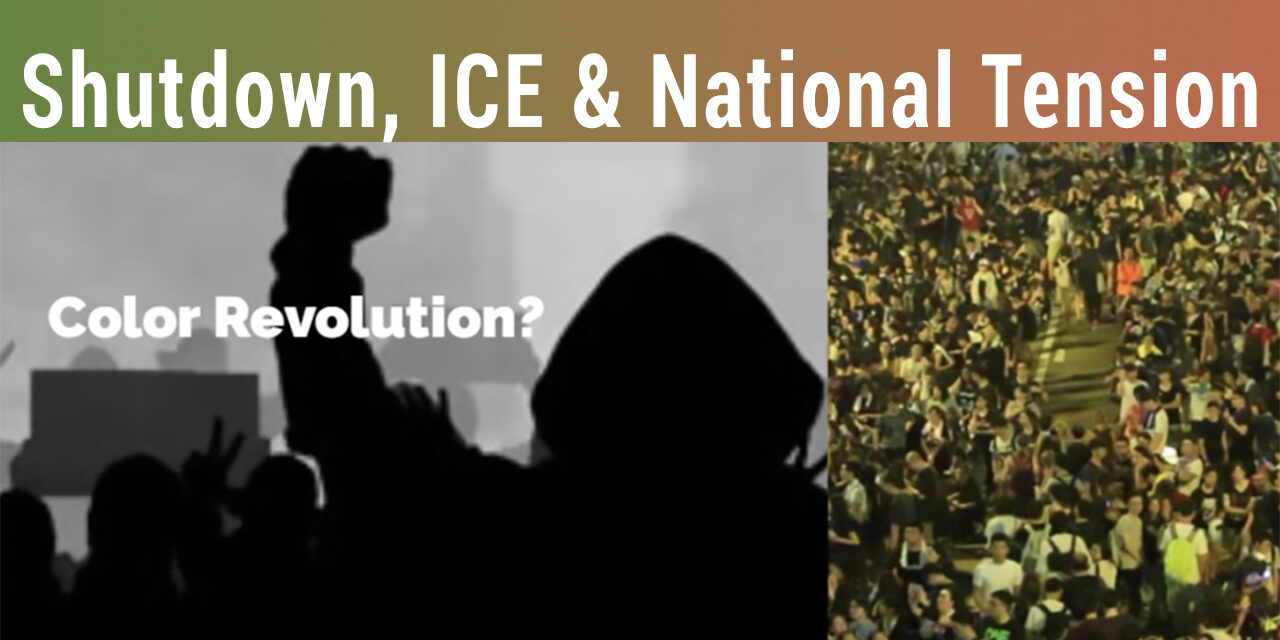
A simple search about ICE protests in Denver opened a door into something far more complex — a network of coordinated activism, foreign‑based organizers, professional protest infrastructure, and a pattern that mirrors the classic stages of a color revolution.
In this week’s episode of OpenAgenda.wtf, we unpack what we found, why it matters, and how these movements operate beneath the surface.
The Shutdown, ICE, and a Growing National Tension
Congress narrowly avoided a government shutdown, extending funding for two weeks while negotiations continue — with ICE at the center of the dispute.
Demands include restricting ICE’s ability to wear face coverings and limiting their presence at polling locations. But the protests surrounding ICE aren’t isolated. They’re coordinated, well‑funded, and increasingly disruptive.
Coordinated Protests — Not Grassroots
A search for “ICE protests Denver” led to FindAProtest.info, a UK‑based platform run by activists outside the U.S. The site links to:
- Foreign‑based writers offering U.S. protest legal guidance
- Professional protest art libraries
- Children’s “Abolish ICE” coloring books
- Training materials for organizing, messaging, and rapid response
The deeper we looked, the clearer it became: this is not spontaneous civic expression. It’s a structured ecosystem.
Colorado’s Own Network
Colorado hosts multiple coordinated activist hubs, including:
- Colorado Rapid Response Network
- We Keep Us Safe Colorado
- ICE‑Ready Kits and whistle protocols
- Training materials for canvassing and community defense
These are not small volunteer groups — they are organized, funded, and strategically aligned.
The Seven Stages of a Color Revolution
Political scientists outline a predictable pattern:
1. Narrative framing — de-legitimizing institutions
2. Mass mobilization
3. Escalation and disruption
4. Institutional pressure
5. Foreign support and amplification
6. Portraying enforcement as brutality
7. Critical mass and forced political change
The ICE protest movement checks many of these boxes.
Why This Matters
It is reported that only an estimated 3% of the population is actively involved — but with media amplification, NGO coordination, and international support, that 3% can appear enormous.