

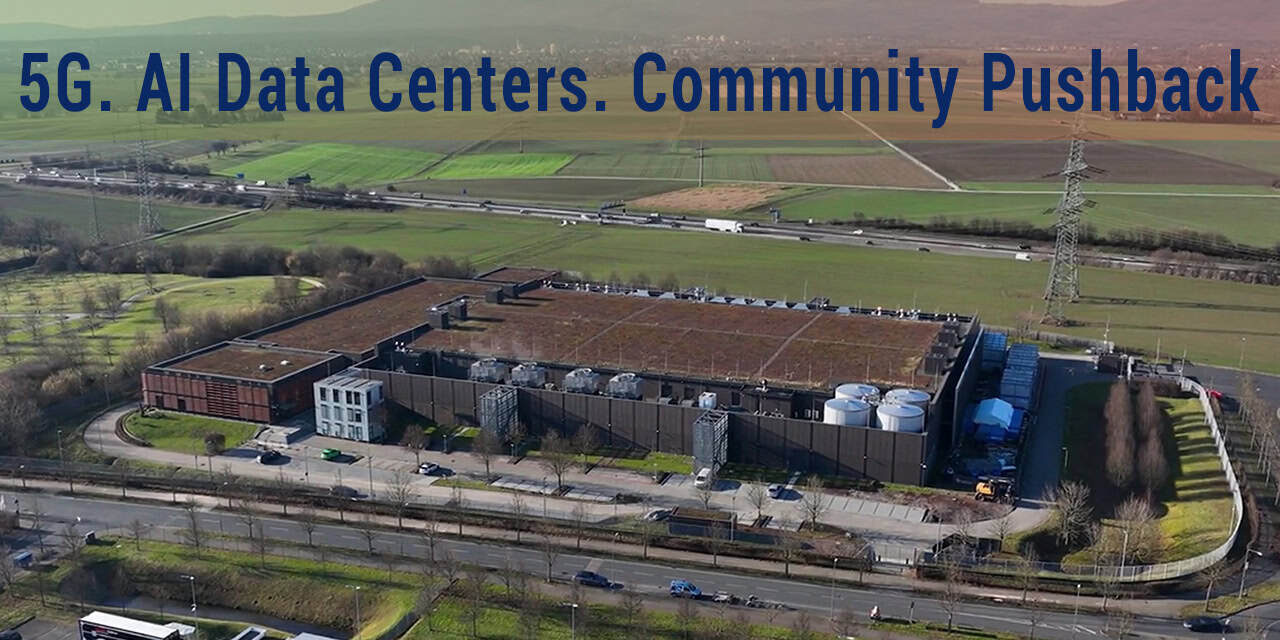
Across the United States, citizens are waking up to a growing concern: the rapid expansion of 5G towers and AI data centers in residential and suburban areas. While these technologies power our digital world, the public is increasingly questioning the health, environmental, and economic impacts that come with them — especially when local voices are being pushed aside.
During this week’s episode of OpenAgenda.wtf, we explored the rising tension between communities and the industries driving this infrastructure boom. Organizations like Children’s Health Defense and the Environmental Health Trust are challenging the safety claims surrounding 5G radiation, pointing out that long‑term studies — especially involving children — are lacking. Meanwhile, citizens across the country are discovering just how many towers already surround their homes using tools like AntennaSearch.com.
But the concerns don’t stop with 5G. AI data centers — massive facilities that power artificial intelligence models, cloud computing, and digital storage — are now being proposed in towns like Windsor, Colorado. These centers require staggering amounts of water (up to 5 million gallons per day), generate continuous noise, and rely on diesel backup generators that release pollutants linked to asthma, cardiovascular disease, and increased cancer risk.
In drought‑stricken regions like Colorado, the idea of allocating millions of gallons of water to cool server racks while residents face irrigation delays is raising serious questions. And when citizens attempt to voice concerns, new federal legislation such as HR 2289 threatens to limit local authority and public input on tower placement.
One of the most powerful moments in this episode came from the viral testimony of Will Hollingsworth, a digital artist from Ohio who spoke out against a proposed data center in his town. His message was clear: these projects are not simply “progress.” They are resource‑intensive industrial operations that can reshape a community for decades — often with minimal local benefit.
Colorado residents are now facing similar decisions. With proposed data centers near Windsor Lake, the Poudre Trail, and residential neighborhoods, citizens are organizing petitions, attending county meetings, and demanding transparency.
This isn’t about rejecting technology. It’s about responsible planning, environmental stewardship, and protecting the rights of local communities.
If you live in Northern Colorado — or anywhere facing similar proposals — now is the time to get informed, get involved, and make your voice heard.